Wednesday, May 6, 2015

Why Steven Universe Needs to Be a Boy

When Steven Universe began production, I was hopeful, but skeptical. Not just because of my history of disappointment with stories that weren’t as progressive as I’d wanted, but because despite what appeared to be “strong female characters,” the main character - Steven Universe himself - was still going to be male. I’ve seen others express similar concerns. However, now that the first season has ended, it seems to me that not only has this show lived up to almost every hope I’d had for it, but that Steven, the title character, has to be male to accomplish many of those successes.

While I still believe there are not enough good lead female protagonists in action/adventure roles (many examples I still find problematic), Steven Universe is significant because it goes beyond simply having positive portrayals of women and female-identified characters and instead aims bigger, building a larger feminist-influenced society for these characters to exist in. This world is not perfect and similar to our own in many ways - racially diverse, relationships both healthy and toxic, individuals experiencing love, friendship, insecurity, and loss - but unlike our world, noticeably absent are even the remotest suggestions of strangeness about a boy who loves pink and romance, shapeshifting genderless beings choosing to look like women of color with a range of body shapes and not the “default” white male, or positive non-traditional families (one character does express fear of judgement about a “non-nuclear family,” but of course in this world, acceptance is what results).

Most significantly, while the story is, on its surface, about a boy learning to be a superhero from his superhero guardians, the show does not emphasize the traditional masculine superhero traits of power, dominance, and aggression as the goal to aspire to. Rather, strength (of character, body, and mind) comes from compassion, love, sensitivity, and kindness – traditionally feminine “strengths” that here are not portrayed as strictly “feminine.” The Crystal Gems, female “superheroes” of this world, each embody these ideals in their own way, and none moreso that Rose Quartz, Steven’s mother and the most powerful leader of the Crystal Gems, respected even by her enemies. However, an all-girl team, would potentially reinforce the stereotype that, rather than being universal, these traits are “natural” to being female; a male hero who displays these strengths is needed to show that they are indeed accessible to everyone. Steven’s father, Greg, does embody the idea of strength in love, but is a semi-homeless normal human. Because he doesn’t have any of the Gems’ great abilities, if he were the only male character expressing these traits, the story would risk implying that men who are sensitive are still “inferior,” potentially falling into tokenism and being read as either representing a patriarchal image of male weakness as “feminine” or conforming to the stereotype that feminism is “really” about female superiority. Greg, as wonderful as he is on his own, still needs a male Steven to indicate a different pattern of what it means to be a strong male character that’s separate from power and financial provider. Too much history is wrapped up in the association between “female,” “kindness,” and “weakness” for the show to have a female Steven and still clearly convey that it’s creating a world different from ours – a “what if” world where people of all genders are not restricted by gender roles (Yes, there is also one non-binary character who exists, loved and unquestioned, for the one episode they appear in).

In adventure-based fiction, we often challenge that association by focusing on female characters aspiring to “masculine” traits in order to show women as equals to men. However, by primarily utilizing this perspective, we risk implying that we still place a higher value on “masculine” ideals, unintentionally diminishing traditionally “feminine” traits. By extension, we can end up not actually challenging the association of these traits with femininity at all, thus unintentionally upholding the patriarchal concept of the feminine as lesser or weaker. And so we need to also show traditionally feminine ideals embraced by “strong” male characters in order to more fully break the gendered association.

Having a boy as the main character accomplishes this because the main character is the viewer’s access to the world and the lens for how we are intended to see and interpret things in that world. A heroic main character’s values can normalize those values as something we, the viewers, will implicitly accept, and we need stories that normalize not just powerful women, but men and boys who respect women in a way that’s empowering for everyone. Normalizing a boy like Steven tells boys that yes, looking up to women and not conforming to gender stereotypes is positive and acceptable, and tells girls that yes, even “important” boys (as implied by being the protagonist) can indeed learn from and respect them, and yes, they can expect boys to be able to relate to them.

And so, along with the expected female characters who counter stereotypes and patriarchal ideas about what it means to be female or feminine, we see in Steven Universe a boy who admires, is inspired by, and wants to be like the women in his life. More than that, a male main character relating to women emphasizes the full extent of this creation’s vision for the world – a complete, rounded world showing what feminist goals can mean for all genders, including a different, positive way of being a boy that challenges gender stereotypes for men, and a society that doesn’t judge them for it.

Males and masculinity may get the most positive attention in patriarchy, but that doesn’t mean they don’t need any attention from feminism. Feminism affects everyone – it has to, if our goal is to make real societal change – and so it can’t succeed if we ignore the male half of the population’s role in and impact by feminist ideals. If feminism wants to change the world, it has to show from all angles what that world might look like. A girl learning from other women is important, but only shows half the story if that’s all we focus on. A boy living and growing happily in a feminist world is revolutionary.

Steven has to be a boy and has to be the main character because Steven is the child, new to this world, and experiencing everything for the first time, learning how to live in his society. And so are we, the viewer, learning what could be, what kind of potential world we could have, seeing and experiencing this hopeful, positive vision for the first time along with him.

Friday, January 30, 2015

An underlying framework for feminist thinking about gender roles


If you’re going to promote as normal the idea that masculinity means being strong, aggressive, assertive, and sexual (or the Christian euphemisms “visual” and “only interesting in one thing”) and then normalize the idea that “real” men are “masculine” (and straight), then you can’t expect women to not worry about rape whenever they’re around men.


Feminism is not about hating men. However, it can be about hating some commonly-accepted forms masculinity, which only translates to “hating men” if those forms of masculinity are synonymous with being male. Feminism as a concept does not treat the two as synonymous, only as traits commonly found together because of the socialization of boys and girls within our culture’s expectations about gender. This is what is meant when feminists want to challenge the traditional views of gender roles. How “male” you are is not determined by how many traits you share with a given concept of masculinity; likewise for “female” and “femininity”. Generally speaking, feminists don’t want to “feminize” men or society – they want to get rid of that kind of dichotomous thinking entirely so people are free to be what they want!

Feminism focuses on the female side of gender because, historically, that’s where the most attention has been needed. Feminism does address men’s issues, but more commonly from a theory-based perspective because as long as society still divides us into separate roles, it’s not possible for women to solve men’s social problems. Traditionally, society presents gendered problems as a result of conflict between the genders or against each gender’s supposedly “natural” role, making many men’s issues the fault of women, or at least feminists, not respecting those norms. But from a feminist perspective, the problems men face come from harmful forms of masculinity and those restrictive gender norms themselves (ex: the old and very un-feminist, gendered assumption that “real” men can’t get raped by women because the expectation that men always want sex means there can’t be any force or coercion - you can't have been forced if it's something you already wanted). Feminist women alone can’t fix that for men because what needs to be fixed is that harmful masculine stereotype (ex: of men always wanting sex). We can go part of the way by not contributing to these harmful ideas, but men have to go the rest of the way by rejecting these things too. Feminism is not the origin of these harmful gender norms, but the philosophical perspective that exposed them, and it’s up to the people involved to find and act on solutions. But that can’t be done if the people interested in men’s issues embrace and defend the harmful, socially constructed concept of what it means to be male, rather than recognizing that that concept can be rejected without rejecting being male.

Our gender shapes what we experience in the world, both because of our biology and the social norms and interactions we develop with, but we are each still individuals. We still have the ability to question what we’ve learned about our genders, why we are the way we are, and how that shapes how we relate to and what we expect from others, and what we actually want for ourselves, whether it conforms to the social norms or not. The concept of the “average” man or woman may be interesting when talking about populations, but has little value for each of us as individuals, except what value we give it. And we don’t need to give it much - we shouldn’t give it much if we want to be truly free to be ourselves without restrictions and still have healthy, respectful relationships with others.


(None of this is to say that all individual feminists uphold all these ideas all the time or that this is the only form of feminism you’ll find. There are many forms of feminism, many ways to express them, and many different degrees of understanding these issues. However, what I give here is my understanding of a broad form of feminist thinking about gender and gendered social problems that hopefully can explain the basic perspective many feminists are working from when they speak out about these issues.)

Thursday, August 14, 2014

Subconscious impressions of others

No one's perception of others is neutral. Even our perception of a stranger, someone we've never before met, does not start from a "blank slate" and develop only as we get to know the person.

Our starting point perception comes from our past experiences: people they remind us of, knowingly or unknowingly; information, correct or incorrect, remembered or just a vague feeling, that we learned about the group or identity we attribute to them; feelings and images we associate with who/what we see at first glance; perceptions and portrayals we consciously or unconsciously picked up from family, friends, and our larger communities and societies; our familiarity with aspects of their self-presentation; the context of our meeting. All of these things affect our "first impressions" of every single person we meet, and left unexamined, will continue to influence all further interactions with them and others we deem like them.

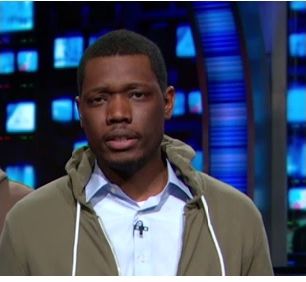
More difficultly, all of those initial perceptions can and often do conflict with what we intellectually know and think. Any of us may know and truly believe it's wrong to judge people by how they look, yet still react differently to people based entirely on their appearance. Studies have shown this, but we can even demonstrate it in ourselves. Side by side images of the same person, one of them in a suit in an office and one in a t-shirt and jeans at a party create very different impressions and bring up very different feelings, even though they are both real expressions of the person's identity and personality. Or two different people wearing the same thing can bring up different feelings. Don't believe me? Take this example of one of the Daily Show correspondents and honestly pay attention to your feelings and impression of him.
 

Now take a look at another person from the same segment with a similar expression:


There's a good chance you won't feel the same about both (and this reaction isn't exclusive to comparisons of race, gender, or even just general appearance; any two people will elicit different responses simple because they're different people and each of us picks up on more makes associations to different aspects and elements. However, it's usually more apparent when between groups our society makes significant distinctions between, which is why I use race here. You may notice it more in yourself with a different comparison.)

Reacting differently to different people because of your experiences does not make you a bad person. It is not a character flaw to have been influenced by stereotypes and societal assumptions; everyone is because we are social and learn from and influence each other. We all come to see the environment we live in as normal and pass that on into the future. We also navigate the world and manage information by condensing and simplifying things we don't need to know regularly or that are not a priority in our personal day-to-day life. This helped up survive in the past, and sometimes even now.

But our societies have changed, and we have changed. We interact with a range of people in large, multicultural societies in a way that makes tribalism a liability that prevents us from seeing others as full people like ourselves. We have statistics and research that can help us uncover our subconscious thoughts and compare them to reality. We have the ability to be introspective, assess ourselves and where our initial perceptions come from, and actively counter our gut reactions when they are not helping or develop those that are. We can recognize our own cognitive dissonance of valuing anti-bigotry while still feeling bigoted things and re-train our intuition and our outward reactions to be in line with how we want to be. We can update or question information and ourselves. We can look at ourselves and listen to others and actively decide how we want to define community.

Most people hold subconscious biases, stereotypes, and inappropriate or unfair gut reactions towards at least some others. Most people also want to deny this fact because realizing it hurts our inner sense of self-worth. Wanting to protecting our identity, self, and value is not unreasonable or wrong. It's hard to be vulnerable, even if it's only to yourself. But denial and refusal to really uncover and understand your deepest, inner influences is not real protection and hurts others, even if it may seems to hurt the individual less. Having a real grasp of yourself and why you are the way you are is how you work to be the person you think you are and want to be. And because we're social - we need and care about each other for survival and wellbeing - we're all counting on each other to do the hard inner work so we can all thrive.

Simply stating we're anti-bigotry or anti-discrimination doesn't make it so, no matter how sincere we are, unless we're willing to honestly assess ourselves, and not just others, in the process and takes steps, internally and/or externally, to counteract whatever negativity and bias we unfortunately will find.

Wednesday, May 21, 2014

Patriarchy hurts everyone (with Bronies), Part 1

"If patriarchy hurts men too, then how is patriarchy even real?"

Patriarchy doesn't mean that all men benefit while all women are marginalized; rather, it means that a society is structured to favor a stereotyped masculine ideal that is the default perspective and position, and is expected of all men, with an idealized feminine ideal expected of women, but still defined in relation to the preferred masculine concept.

In practice this means men who do not inherently conform to the masculine ideal are marginalized, although unlike women, being still men (or perceived as such) means they have the opportunity to attempt to conform or fake their conformity. Being men, particularly men who have internalized these masculine norms and do meet them at least partially, they are still favored by a society that perceives them as men (with all the social assumptions that go along with that perception), at least until their perceived masculinity is "removed" (such as having too many stereotypical "feminine" interests, including being attracted to men, failing to meet expected "masculine" standards and presentation, such as clothing and personality).

These men have two main options, attempt to conform to the ideal (or try to expand the ideal to include them), or reject the ideal. Since most people in a society have so internalized their community's norms, they never question them, and try to conform when they notice discomfort (ie: shame or embarrassment).

My Little Pony fans.
My Little Pony has always had a large fanbase of children and adults that was predominantly female; this is how it has continued to exist for 30 years. Although they were a minority, there were male fans even from the beginning. The current series, Friendship is Magic, expanded that fanbase to include more boys and young men. However, rather than integrate with the large, preexisting, majority-female fanbase, they created their own "masculine" fanbase, with a masculine name, Bro-nies, and masculine interests like drawing the characters as "sexy" or making outright porn of it, rejecting the stereotypical feminine elements of the series as less important, and even going so far as to claim the action elements are proof that the series is really for boys, for them, not for girls: that it is masculine, and that being "masculine" makes it superior to the perceived "feminine" previous generations, ignoring the similarities in fantasy and action.

These Bronies are men who, by having a "feminine" interest, fall outside of the male ideal that they have internalized. Patriarchy has hurt them. They feel the discomfort, the judgmental social expectations, the embarrassment over their interest. Many in the past chose to hide their interest from others, or even from themselves, but Bronies embrace their interest. Unfortunately, this leaves them to deal with the cognitive dissonance. They like something "feminine" but have not rejected the masculine ideal that they have internalized as part of their male identity; it's so foundational to their worldview that they may not even know they hold it. And so rather than question the validity of masculine expectations, they reinterpret their interest, reject the feminine parts, emphasize or outright create the masculine parts, push away female fans with their displays of hyper-masculinity and sexuality, all framed as perfectly normal and natural, as that default masculine ideal makes it seem, in turn reinforcing the illusion that yes, FiM must be for boys because mostly boys are here, as well as reinforcing the illusion of how to "properly" be a male fan.

This wasn't the only option though. There were male fans before. Male fans who felt the embarrassment of liking something "for girls" and dealt with harassment and disapproval from not just society, but close family and friends, who were still working out of the patriarchal mindset and judging and hurting these early male fans for it. Yet some refused to reject their interest and instead rejected the masculine ideal, or at least parts of it. This wasn't the easy option of course; there weren't enough of them to make a change in perceptions. They may have still hid their interests from most people, but they joined online fan groups with mostly female fans, and had private collections, and went to pony meets to spent time with other (mostly female) fans. And within the larger fan community, "the boys" had private, safe spaces for only them. Because patriarchy hurts men too.

Bronies had the chance to change perceptions. There were enough of them willing to come out and embrace and defend their non-traditional interests. But they chose not to question and reject the flawed foundation of their masculine identity and fear of the inferior feminine, but instead reshaped themselves and their interests to conform to those expectations and fears. In doing so, they only reinforced the patriarchal concept of maleness, masculinity, and it's superiority to the patriarchal concept female and femininity, setting up the next group of non-traditional males to struggle with the same cognitive dissonance.

I'll address female Bronies/Pegasisters and women who don't conform to patriarchal femininity, as well as the harm of conforming, in other posts.